
3-D Guided Implant Surgery in Mansfield, TX: A Precision Approach to Replacing Missing Teeth
Blog:3-D Guided Implant Surgery in Mansfield, TX: A Precision Approach to Replacing Missing Teeth
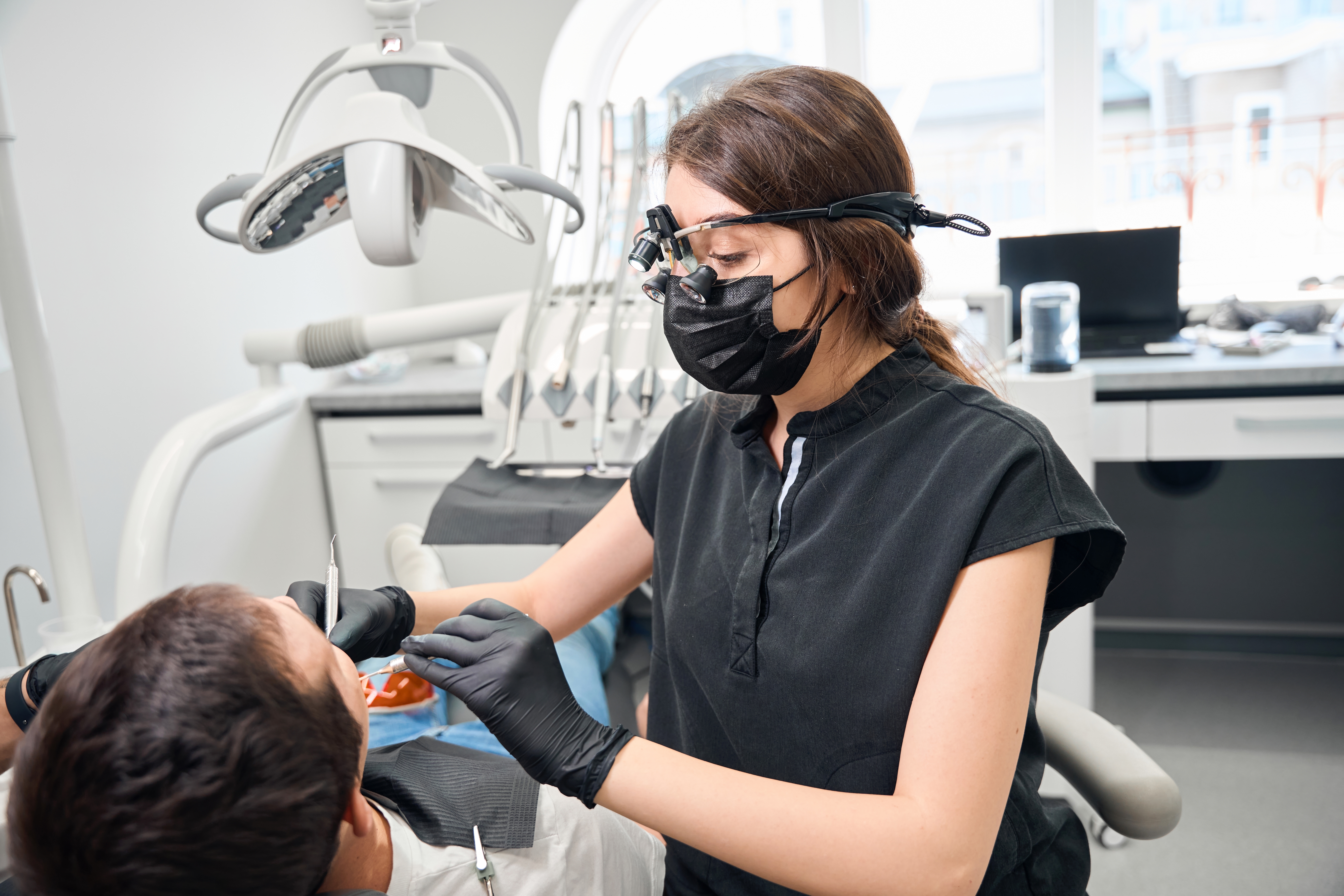
Missing teeth affect far more than the appearance of a smile. They change how you chew, how you speak, and how comfortable you feel every time you sit down to eat. For patients across Mansfield, South Arlington, Grand Prairie, and the greater DFW Metroplex, replacing a missing tooth is a decision that deserves careful planning rather than guesswork.
At Matlock Dentistry, that planning begins with three dimensional imaging. The dentists at Matlock Dentistry use digital technology to map the jaw before treatment begins, giving patients a clearer picture of what to expect and a more predictable path toward a restored smile.
What Is 3-D Guided Implant Surgery?
Traditional implant placement relies on flat two dimensional X-rays and the clinician's direct visual assessment during surgery. Guided implant surgery replaces that approach with a digital plan built in advance.
The process starts with a cone beam CT (CBCT) scan. Our DEXIS CBCT system captures a three dimensional volume of your jaw, showing bone height, bone density, nerve pathways, and sinus position from every angle. That volume is loaded into planning software, where the exact position, angle, and depth of each implant is determined before any instrument enters the mouth.
From that plan, a surgical guide is produced. The guide seats over your teeth or gums and directs the placement to match the digital plan.
How CBCT Imaging and Digital Scanning Work Together
Guided planning depends on two separate datasets that each capture something the other cannot.
CBCT imaging captures what is beneath the surface. Bone volume, bone quality, the position of the inferior alveolar nerve, and the floor of the maxillary sinus all determine whether an implant can be placed safely and where. A standard panoramic X-ray shows a flattened view of these structures. A CBCT scan shows them in true three dimensional relationship.
Digital scanning captures what is above the surface. Our intraoral scanner records the shape of your existing teeth, your gum contours, and how your bite comes together, all without the putty trays associated with traditional impressions.
The two datasets are then merged into a single planning model. This is the practical difference between guided and freehand placement. In freehand placement, the clinician judges angle and depth in real time based on experience and a two dimensional image. In guided placement, that judgment happens beforehand, on a complete model, with the ability to test alternatives and adjust before committing.
What to Expect During Guided Implant Treatment
Every case differs, but guided implant treatment generally follows five stages.
1. Consultation and CBCT scan. We evaluate your oral health, review your goals, and capture the CBCT scan and digital impressions. The scan itself takes well under a minute.
2. Digital planning and guide fabrication. Your implant position is planned in software, and the surgical guide is fabricated to match.
3. Placement appointment. If a damaged tooth needs to come out first, an extraction may be performed at this stage or at a prior visit. The guide seats in place and the implant is positioned according to plan. Sedation options are available for patients who want additional comfort.
4. Healing. The implant bonds with surrounding bone through a process called osseointegration. This stage typically spans several months and is what gives the implant its long term stability.
5. Final restoration. Once healing is complete, an abutment is attached and your custom crown is placed. The restoration is shaded and shaped to blend with your surrounding teeth.
Benefits of 3-D Guided Implant Surgery
Guided planning offers several practical advantages:
• Placement accuracy. The implant position is verified against bone volume and nerve position before surgery, not during it.
• Protection of surrounding structures. Nerve pathways and sinus boundaries are mapped in advance and avoided by design.
• Better restorative outcomes. Planning the implant around the final crown position, rather than the reverse, produces a more natural result.
• Shorter, more efficient appointments. Decisions made in software do not need to be made at the chair.
• Clearer patient communication. You can see the same three dimensional view your dentist is working from.
MID-ARTICLE CTA
Ready to find out whether implants are right for you? Our Mansfield team will walk you through your CBCT results and explain your options in plain language. Request an appointment online or call (682) 323-2105.
Who May Be a Good Candidate for Dental Implants?
You may be a candidate if you are missing one tooth, several teeth, or want a more stable alternative to removable appliances. Patients who have worn full dentures for years often choose implant supported dentures for improved retention while chewing and speaking.
The most common obstacle is bone volume. When a tooth has been missing for an extended period, the surrounding bone gradually resorbs, and there may not be enough remaining structure to support an implant directly. This is precisely what a CBCT scan is designed to reveal. If bone volume is insufficient, bone grafting can often build the site up to support placement later.
Gum health, medical history, and habits such as smoking also factor into candidacy. A consultation is the only reliable way to evaluate all of these together.
What Affects the Cost of Dental Implants
Implant treatment is priced case by case, and several variables drive the total:
• Number of implants placed. Replacing a single tooth differs substantially from restoring a full arch.
• Preparatory procedures. Extractions, bone grafting, or sinus lifts add stages to treatment.
• Restoration type. A single crown, a bridge, and an implant retained denture each carry different costs.
• Insurance coverage. Many plans cover portions of implant treatment, though coverage varies widely by policy.
Our team reviews payment options and financing during your consultation so you understand the full picture before committing.
Frequently Asked Questions
How long does the full implant process take?
Most cases span three to six months from placement to final restoration, driven primarily by the healing period. Cases requiring bone grafting take longer.
Is guided implant surgery more comfortable than traditional placement?
Guided placement is typically more efficient at the chair, and many patients report a shorter, less involved appointment. Local anesthetic is used in all cases, and sedation is available.
How much radiation is in a dental CBCT scan?
A dental CBCT scan delivers a low radiation dose, considerably lower than a medical CT scan of the same region. Your dentist will only recommend one when the diagnostic benefit warrants it.
Can I get an implant if I have been missing a tooth for years?
Often yes. Extended tooth loss leads to bone resorption, so grafting may be required first. A CBCT scan determines whether the site can support an implant as is.
How long do dental implants last?
The implant itself is designed to last decades with proper care. The crown or restoration on top may need replacement over time, similar to any other dental restoration.
Do you place the implant and the crown in the same visit?
Some cases allow a temporary restoration at placement, but the permanent crown is generally placed after osseointegration is complete.
Restoring Your Smile with Confidence
Replacing a missing tooth is a decision worth planning carefully. With 3-D guided implant surgery, that planning happens before treatment begins, using a complete three dimensional view of your jaw rather than an estimate.
Schedule a consultation with Matlock Dentistry to discuss dental implants and advanced restorative options. Call or text our Mansfield, TX office at (682) 323-2105.
Quick Links
Helpful Articles
article_category: products
article_category: psychiatry
article_category: faqs
article_category: cats
article_category: general
article_category: services
article_category: technology
article_category: dogs
article_category: restorative
article_category: vision therapy
article_category: contact lenses
article_category: health
article_category: conditions
article_category: eye surgery co-management
article_category: exotic
article_category: cosmetic
article_category: surgical procedures
article_category: aesthetics
article_category: preventative
article_category: ocular disease management
article_category: eyeglasses
article_category: eye health
article_category: large animal
[]
article_category: psychiatry
article_category: faqs
article_category: cats
article_category: general
article_category: services
article_category: technology
article_category: dogs
article_category: restorative
article_category: vision therapy
article_category: contact lenses
article_category: health
article_category: conditions
article_category: eye surgery co-management
article_category: exotic
article_category: cosmetic
article_category: surgical procedures
article_category: aesthetics
article_category: preventative
article_category: ocular disease management
article_category: eyeglasses
article_category: eye health
article_category: large animal
[]
Flowbite is an open-source library of interactive components built on top of Tailwind CSS including buttons, dropdowns, modals, navbars, and more.
Check out this guide to learn how to get started and start developing websites even faster with components on top of Tailwind CSS.

All Dental Services
We offer a wide variety of dental services to the Mansfield community. Contact us with any questions about our services.

Keep In Touch
For non-urgent questions or to learn more about our services, contact us today!
© 2026 Matlock Dentistry. All rights Reserved - Accessibility Statement - Privacy Policy - Sitemap
Managed and Designed by 